THE DAY HAS 86.400 SECONDS
Kabinet T. Gallery, Zlín, Czech Republic
THE DAY HAS 86,400 SECONDS
Digital collages, oil paint on paper, pigment print on Hahnemühle paper, print on paper and fabric, sculptural objects, film
2026
Größe: Variabel

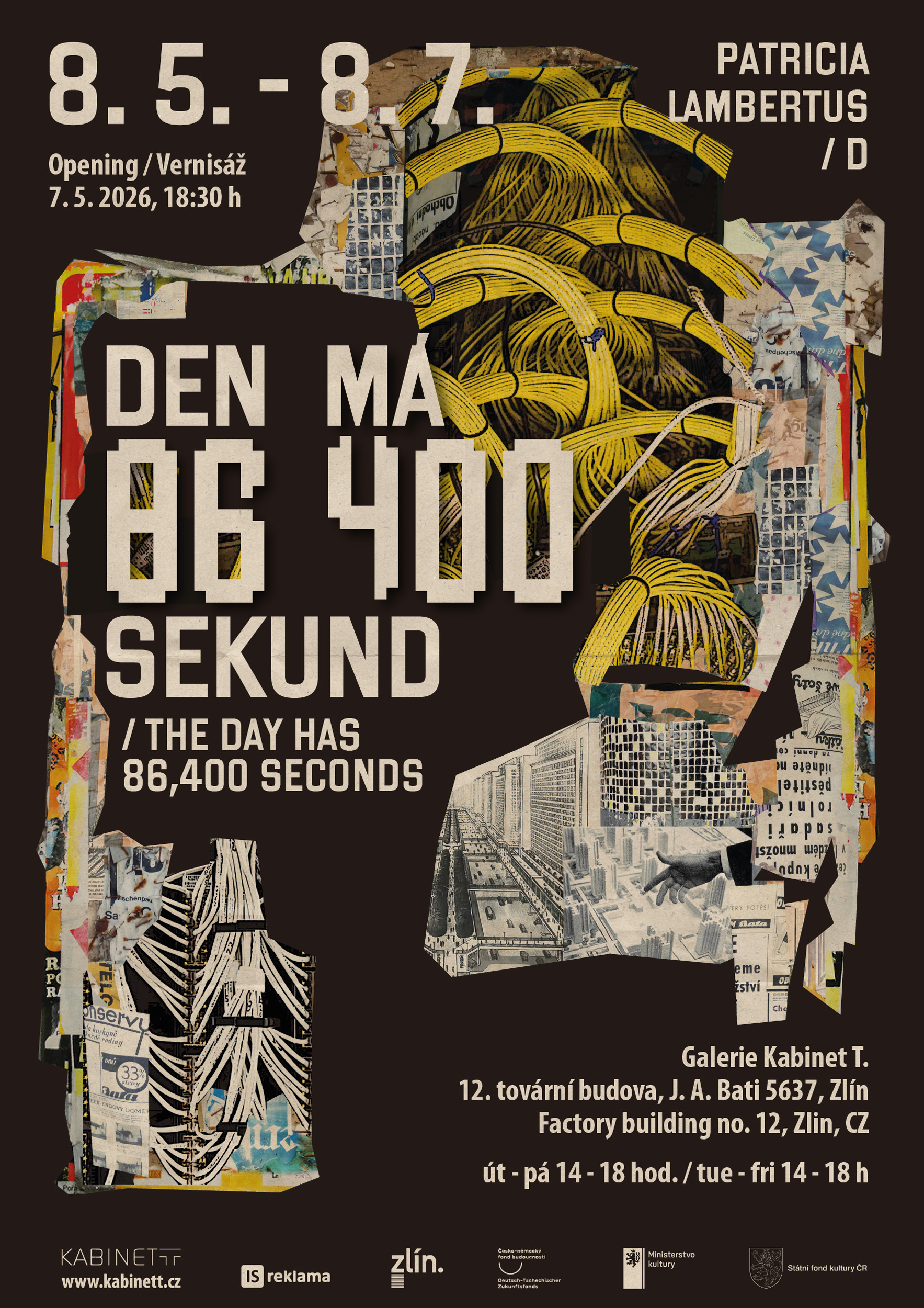
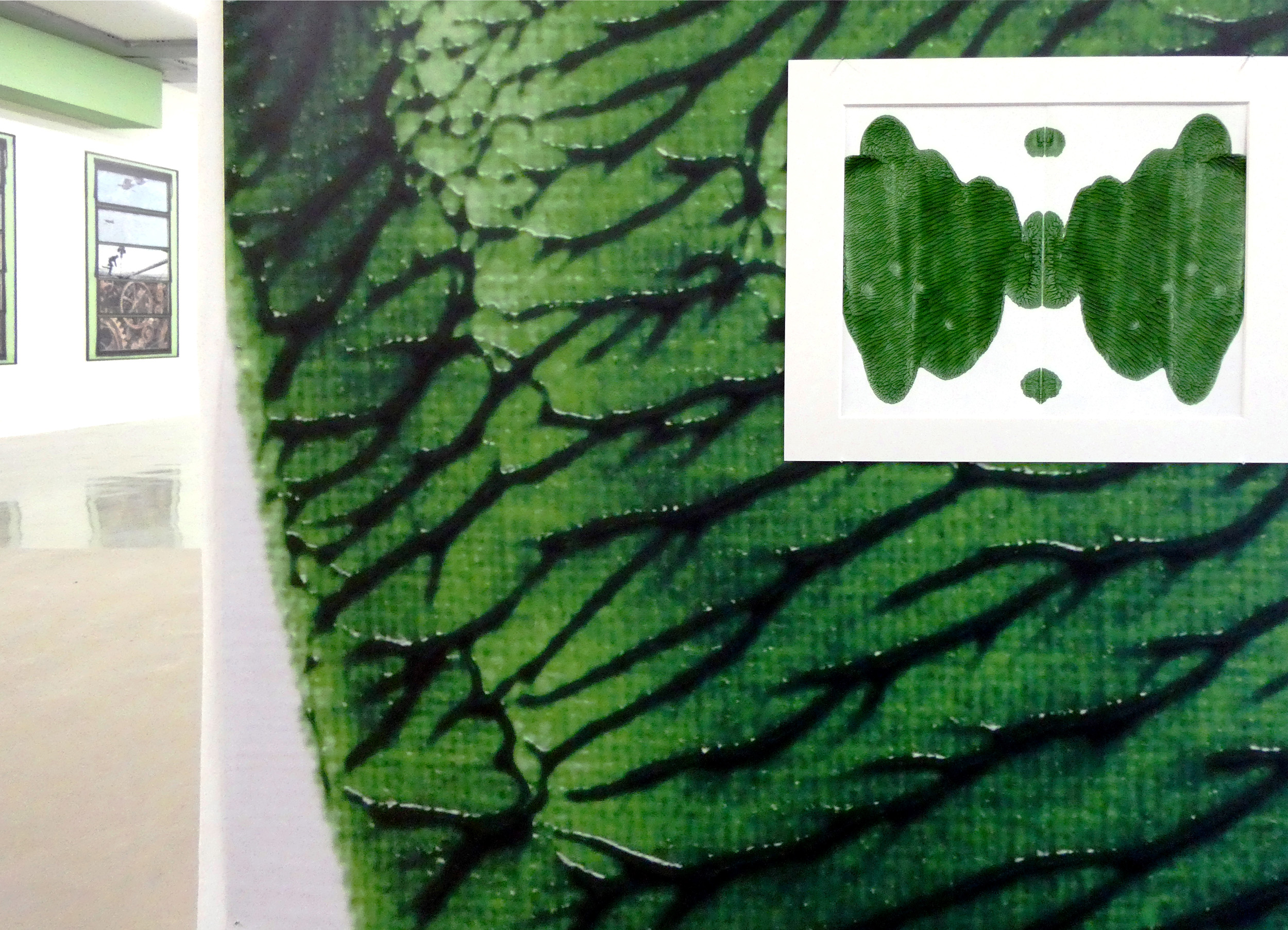
The exhibition THE DAY HAS 86,400 SECONDS takes Zlín as its starting point: a city characterized by modernist architecture, industrial rhythm and the utopian idea of a planned working and living environment.
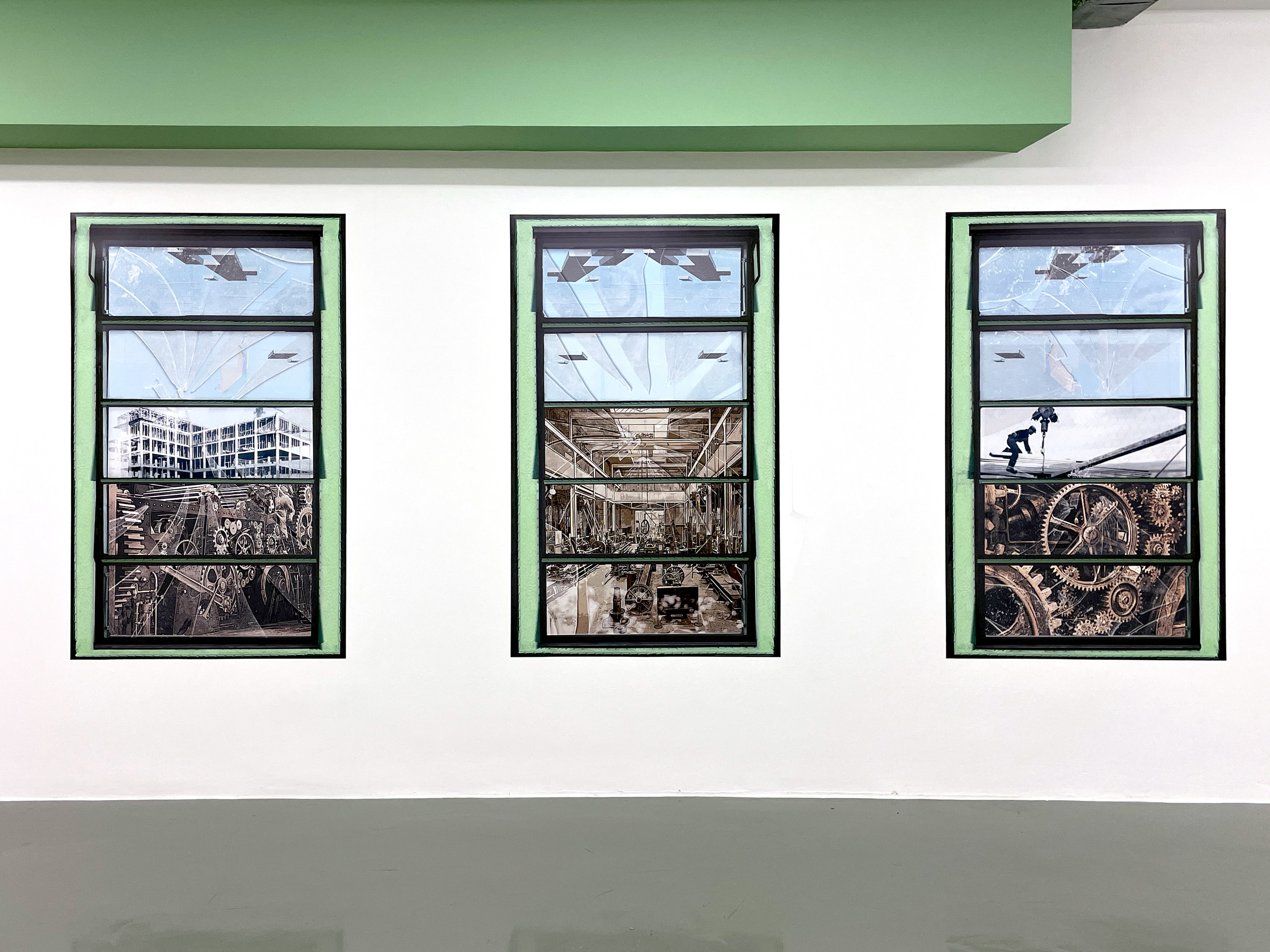
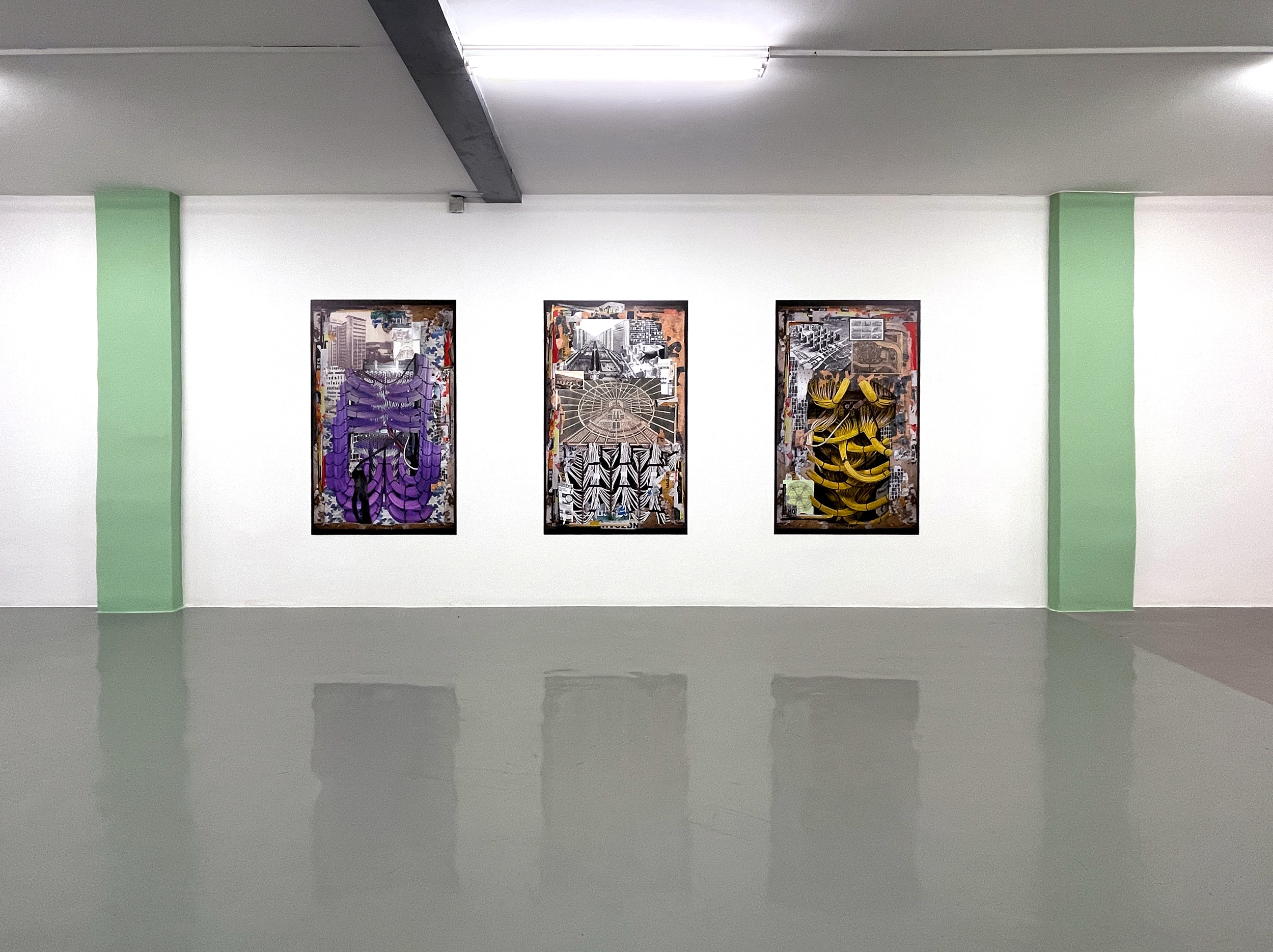
The title refers to the 86,400 seconds of a day—moments that can be understood as open time, but also as measured, controlled, and commodified time. In the exhibition, these tensions unfold in digital collages, architectural fragments, urban images, billboards, paintings, film, and layered surfaces. The result is an associative installation situated between public space, private interiors, memory, and projection.

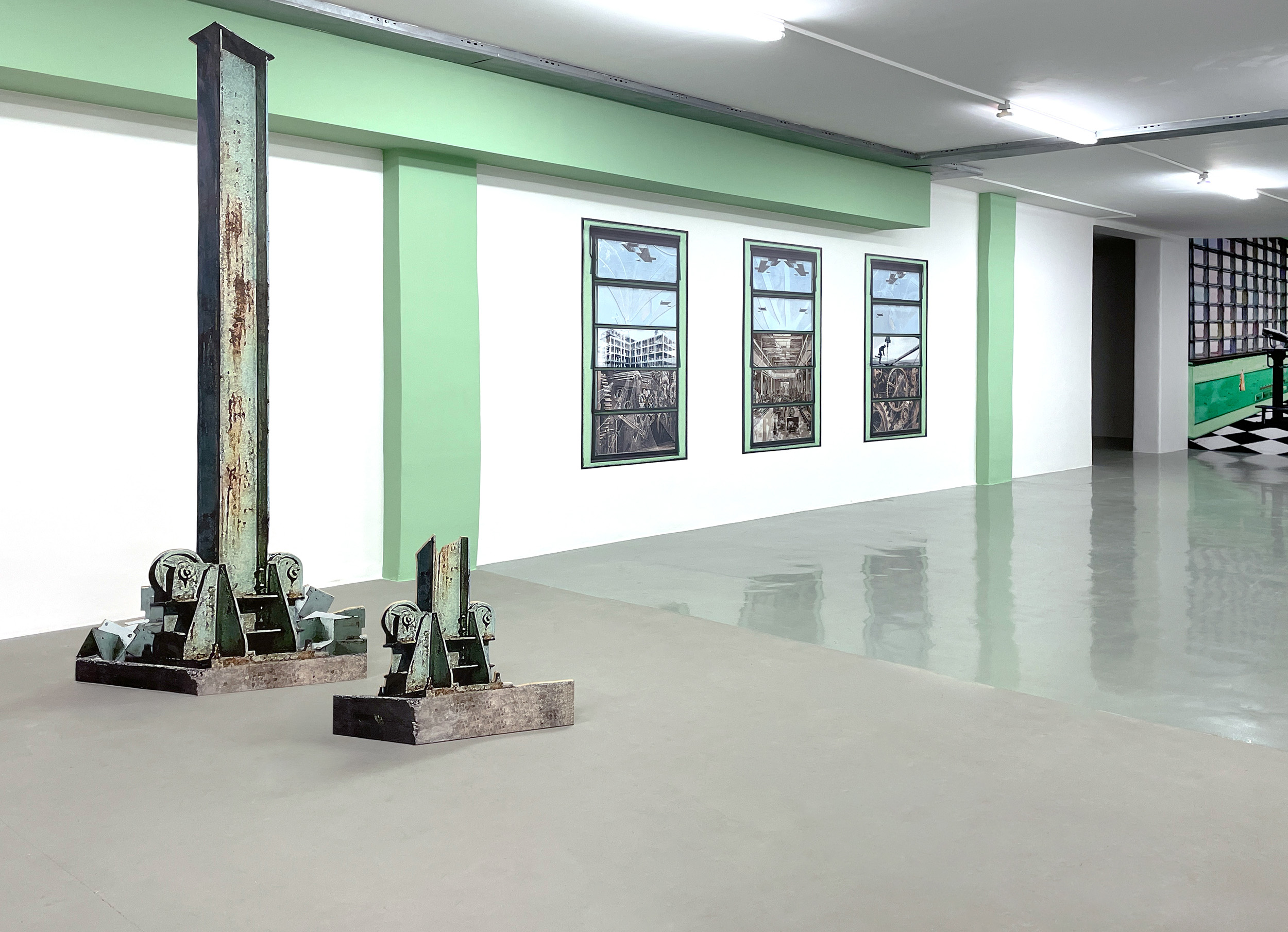
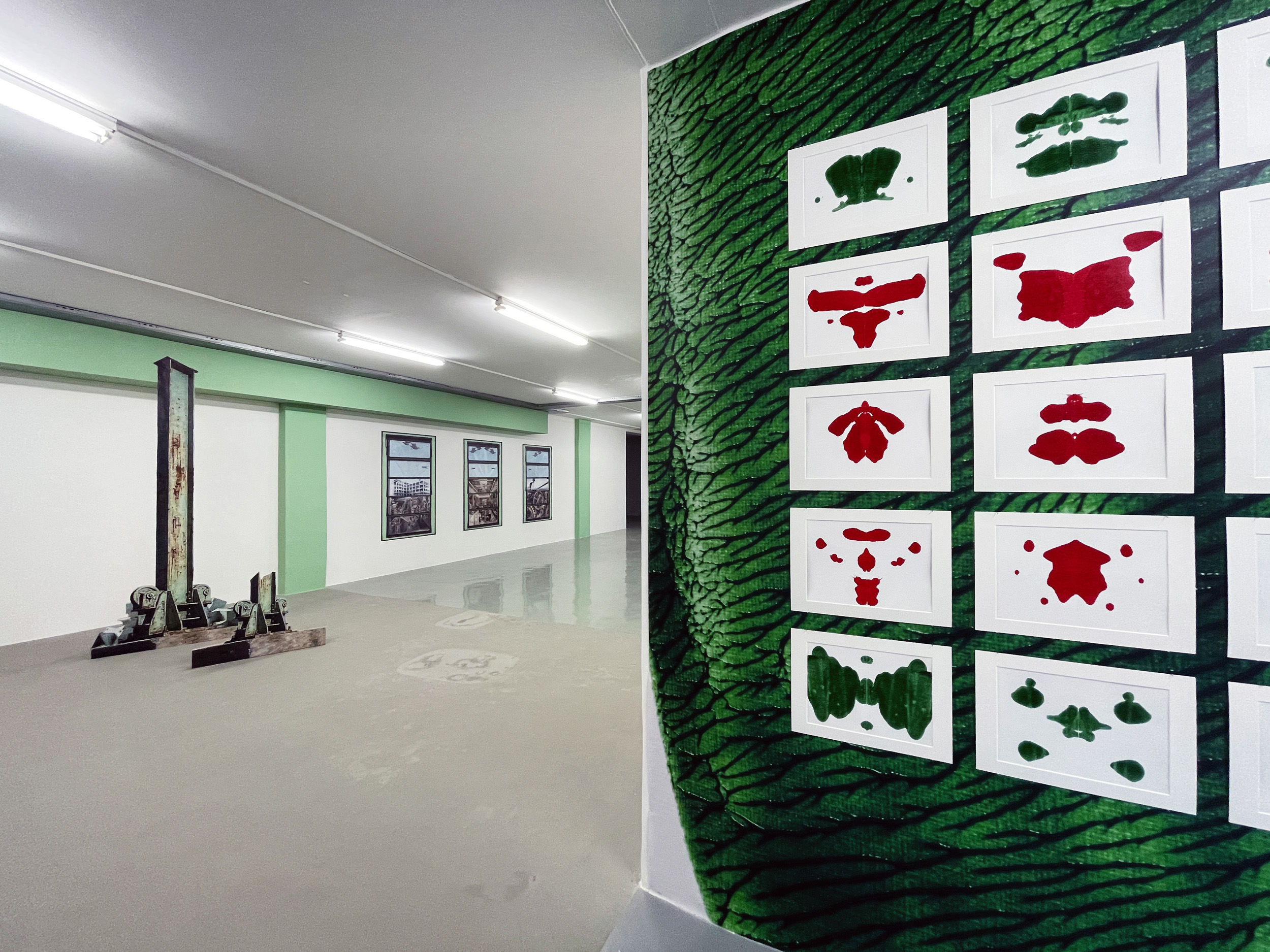
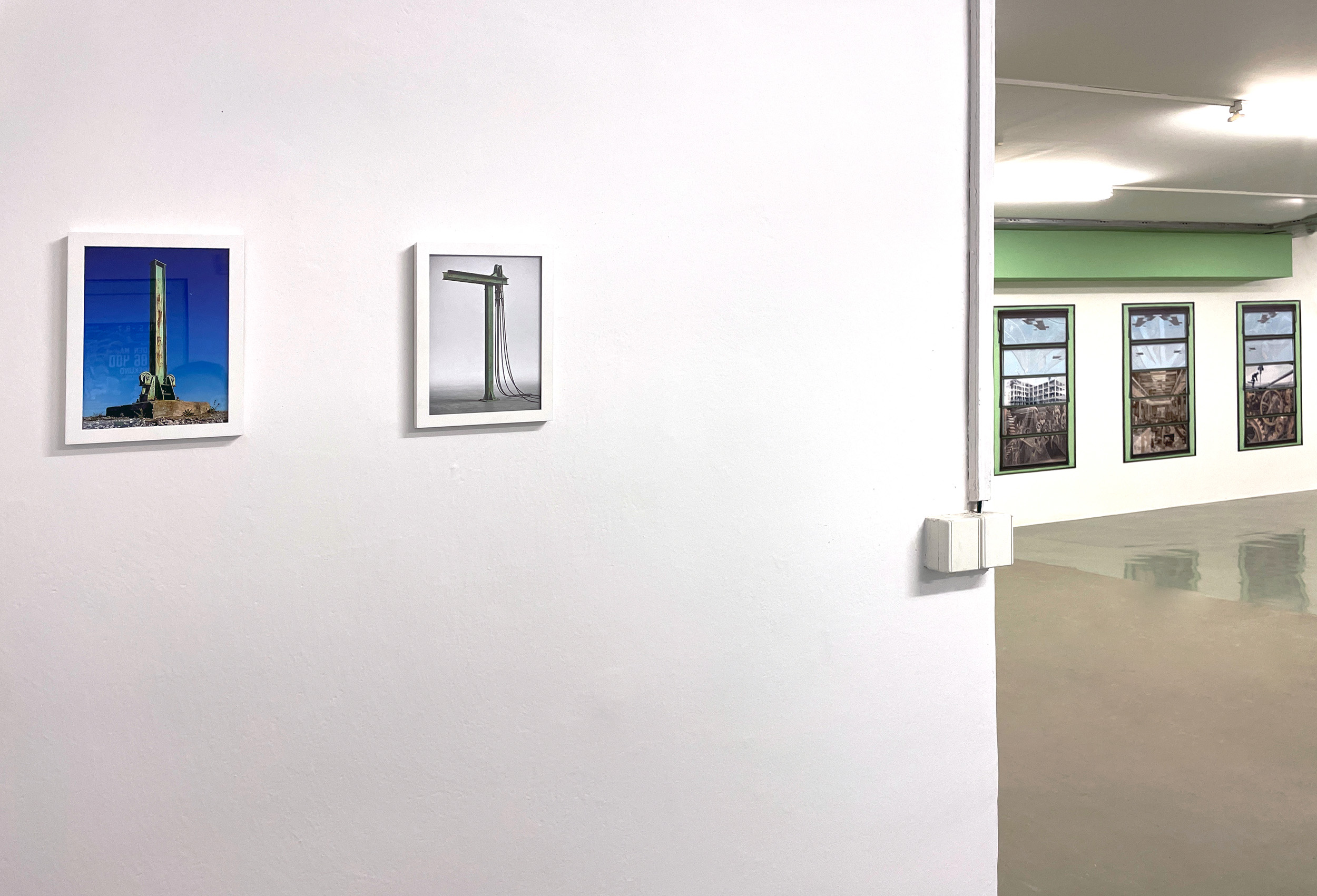
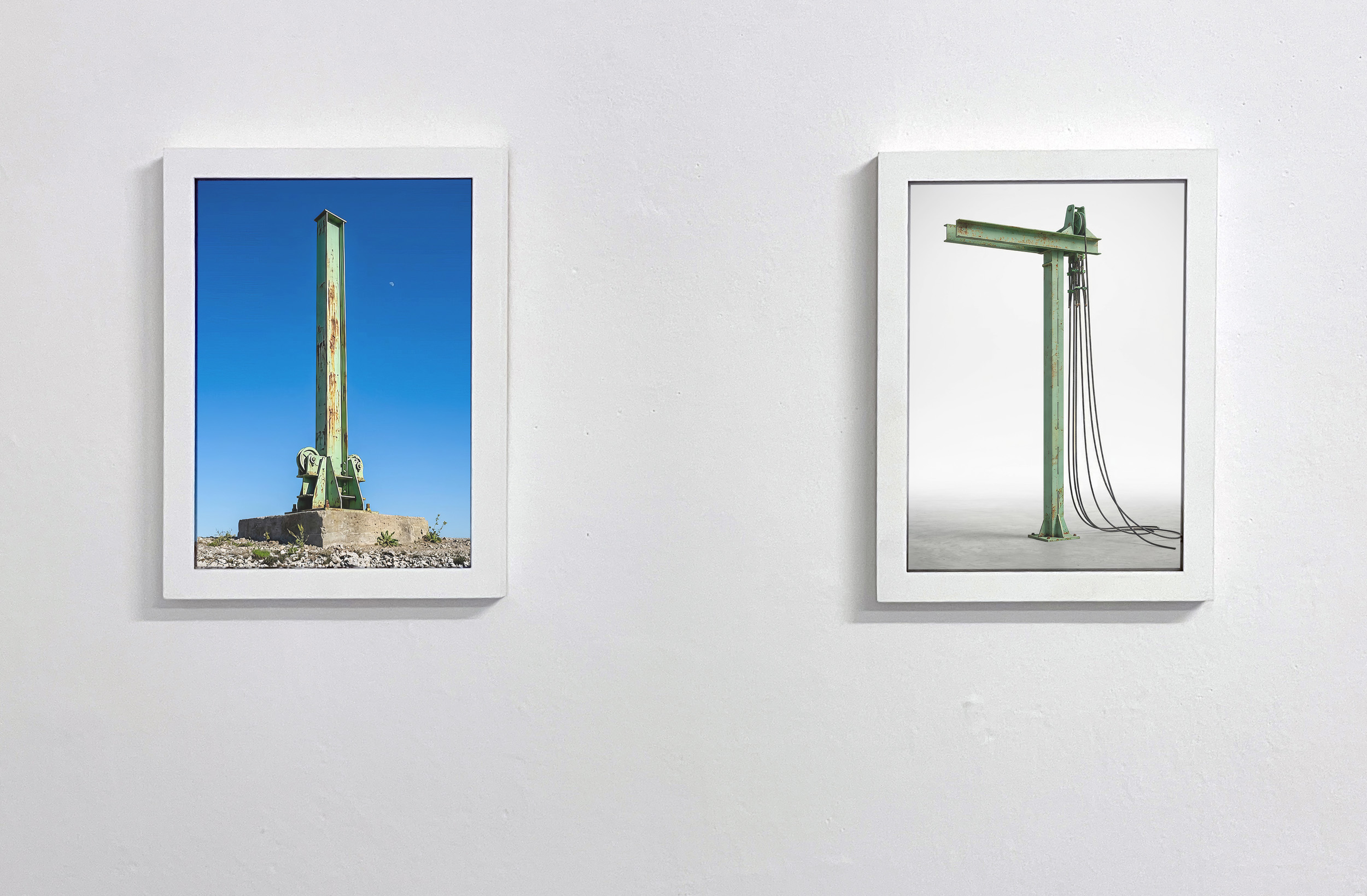
For the exhibition, the visible supporting structure of the gallery space was painted in a specific Zlín green. This green is closely associated in Zlín with the steel beams and steel structures of industrial architecture. It appears as a functional color in the urban landscape and shapes the visual language of the buildings.
The sculptural arrangements of monumental support forms adopt this architectural vocabulary, but deprive it of its function. Devoid of purpose, they stand in space: as pictorial fragments of an industrial order, situated between construction, sculpture, and staging.




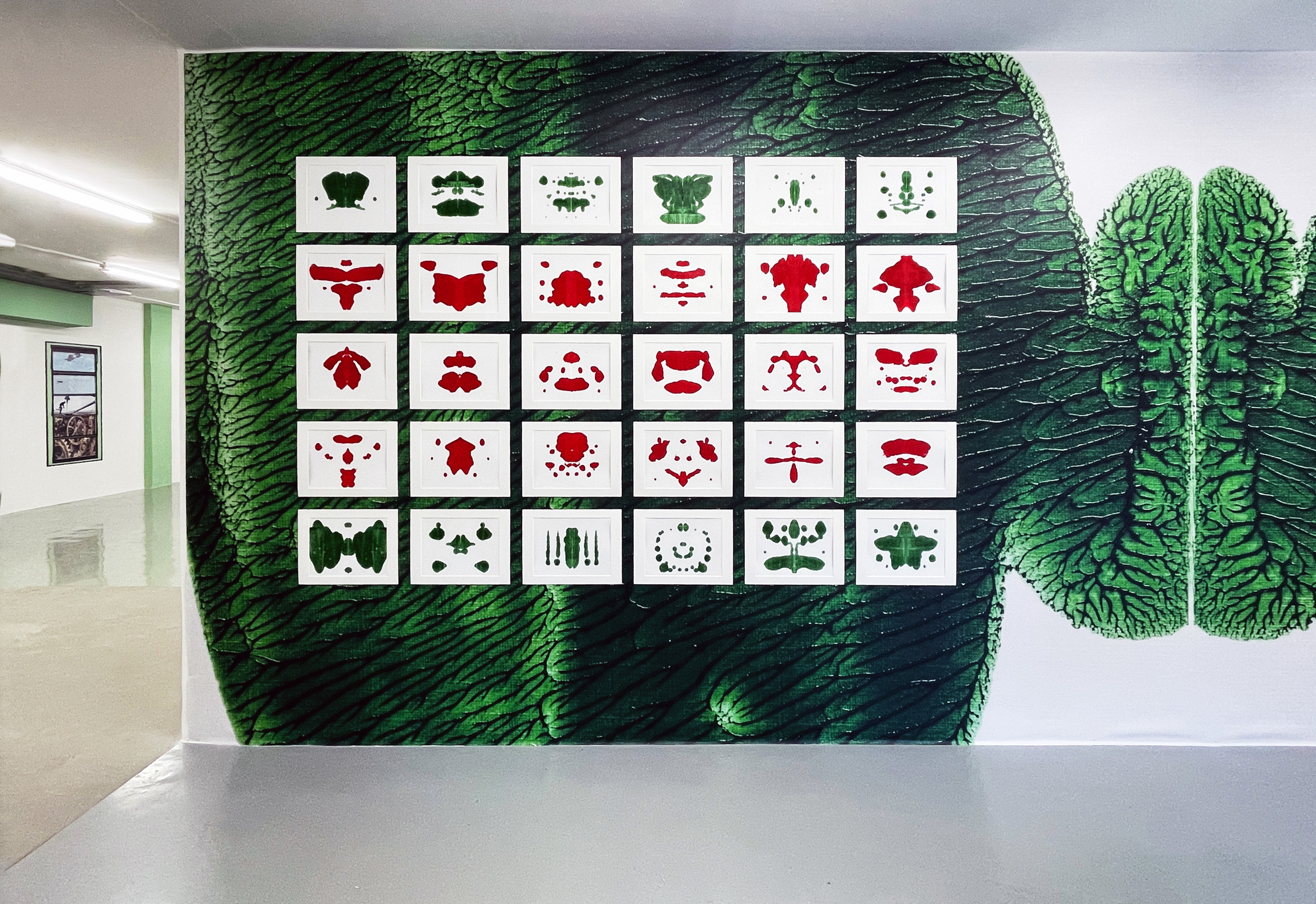
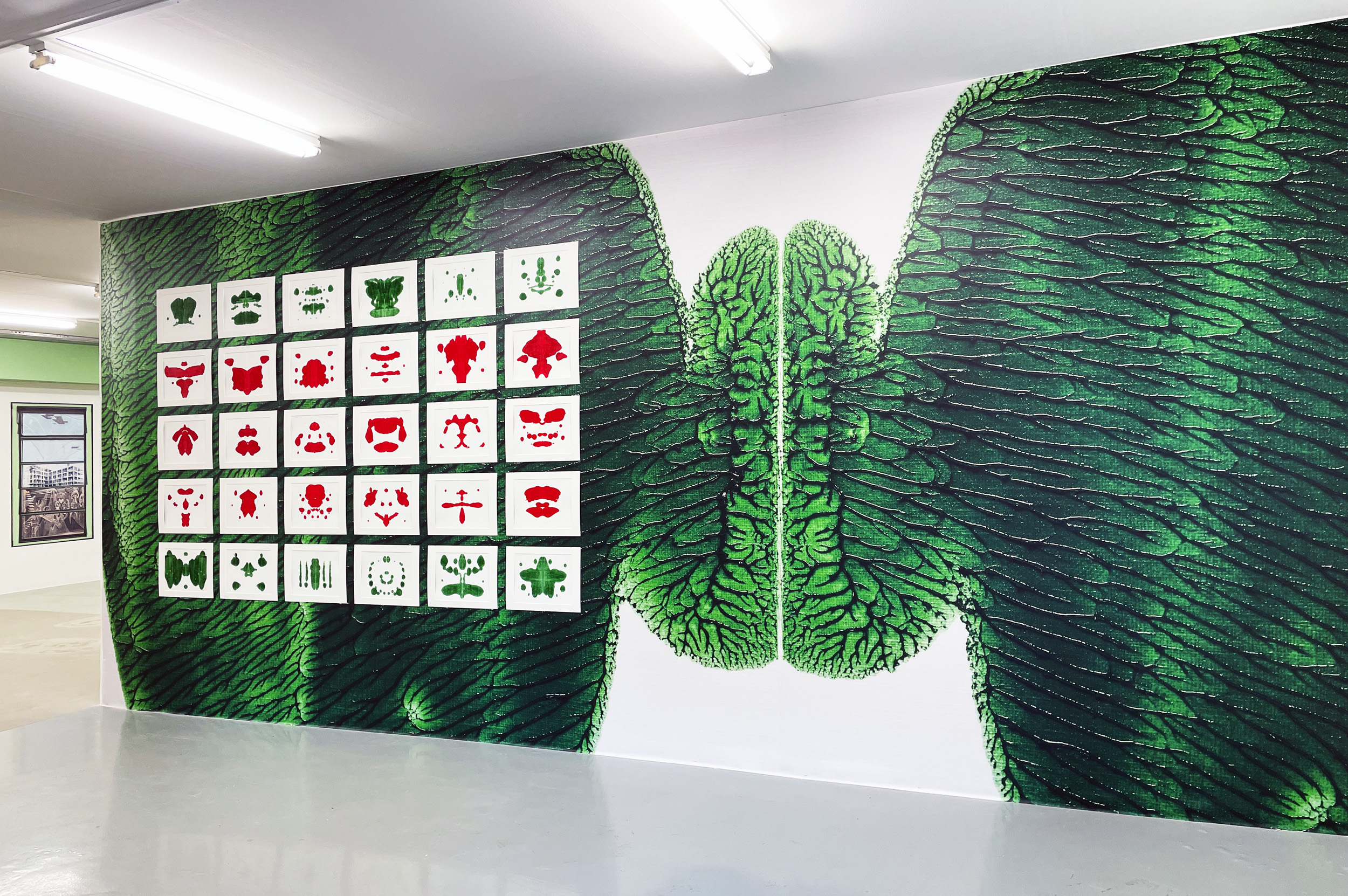
The Rorschach studies translate the principle of the symmetrical inkblot into a painterly process involving imprinting, folding, and reflection. Using oil paint on paper, images emerge that exist between abstraction, projection, and individual interpretation.
Within the installation, they form an analog counterpoint to the digital collages and the industrial order of Zlín—to grids, repetition, functionality, and regimented time. They allude to that which eludes the economization of individual life: perception, inner images, emotions, and personal experience. Red and green refer to brick and steel as defining materials of the city, but here appear as open, subjective pictorial symbols.
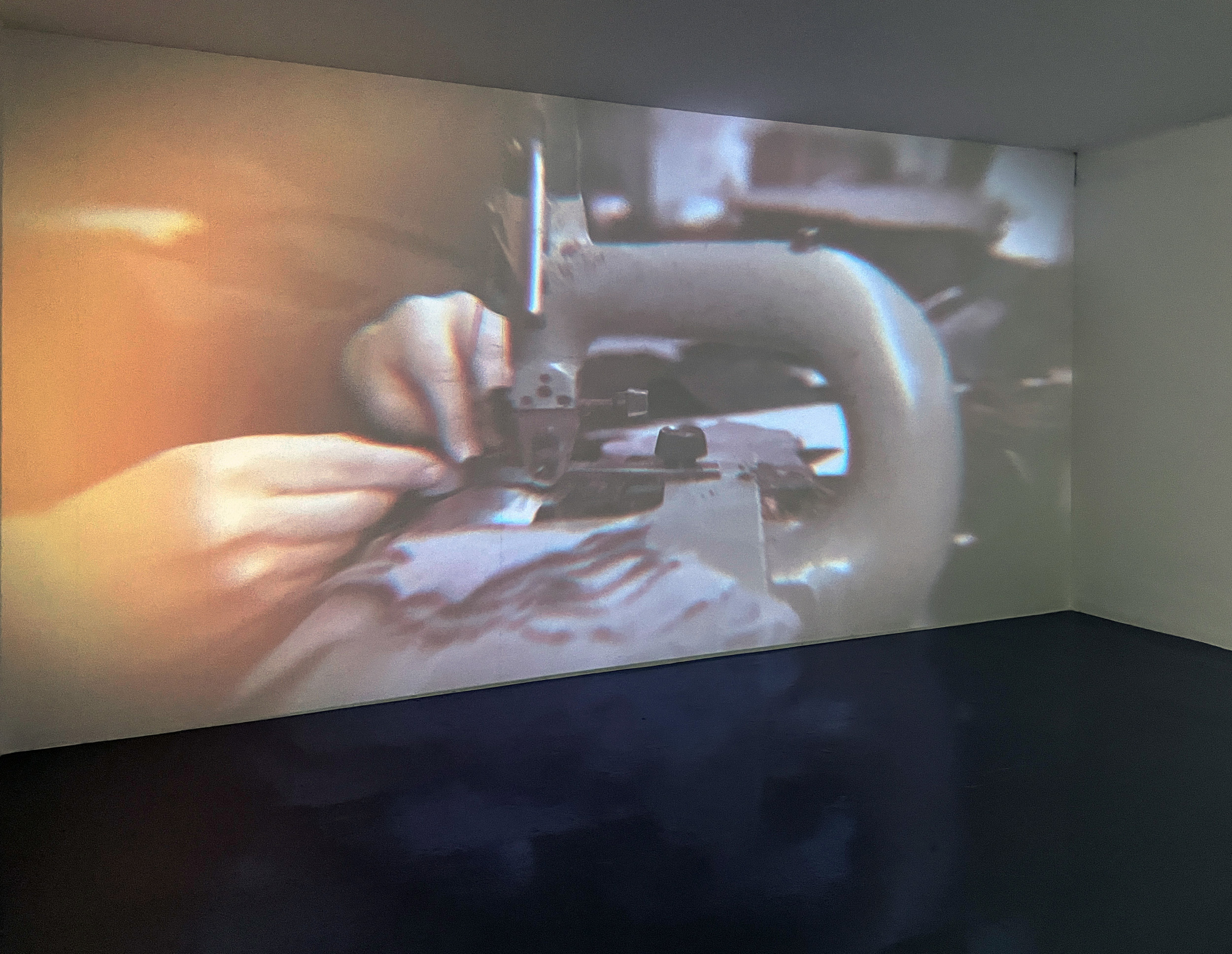
The 12-minute film combines archival footage from Zlín, digital fragments, and AI-generated sequences into an associative montage of factory halls, sewing machines, workers, gardens, living spaces, circuit boards, and sleeping bodies. Developed for THE DAY HAS 86,400 SECONDS, the work follows the 8-8-8 principle—eight hours of work, eight hours of leisure, eight hours of sleep. The 24-hour rhythm is condensed into three equally long film sequences. A pulsating beat pervades the images, intertwining industrial timekeeping with bodily perception. The film presents time as an organized, economized, and simultaneously fragile structure of life.